
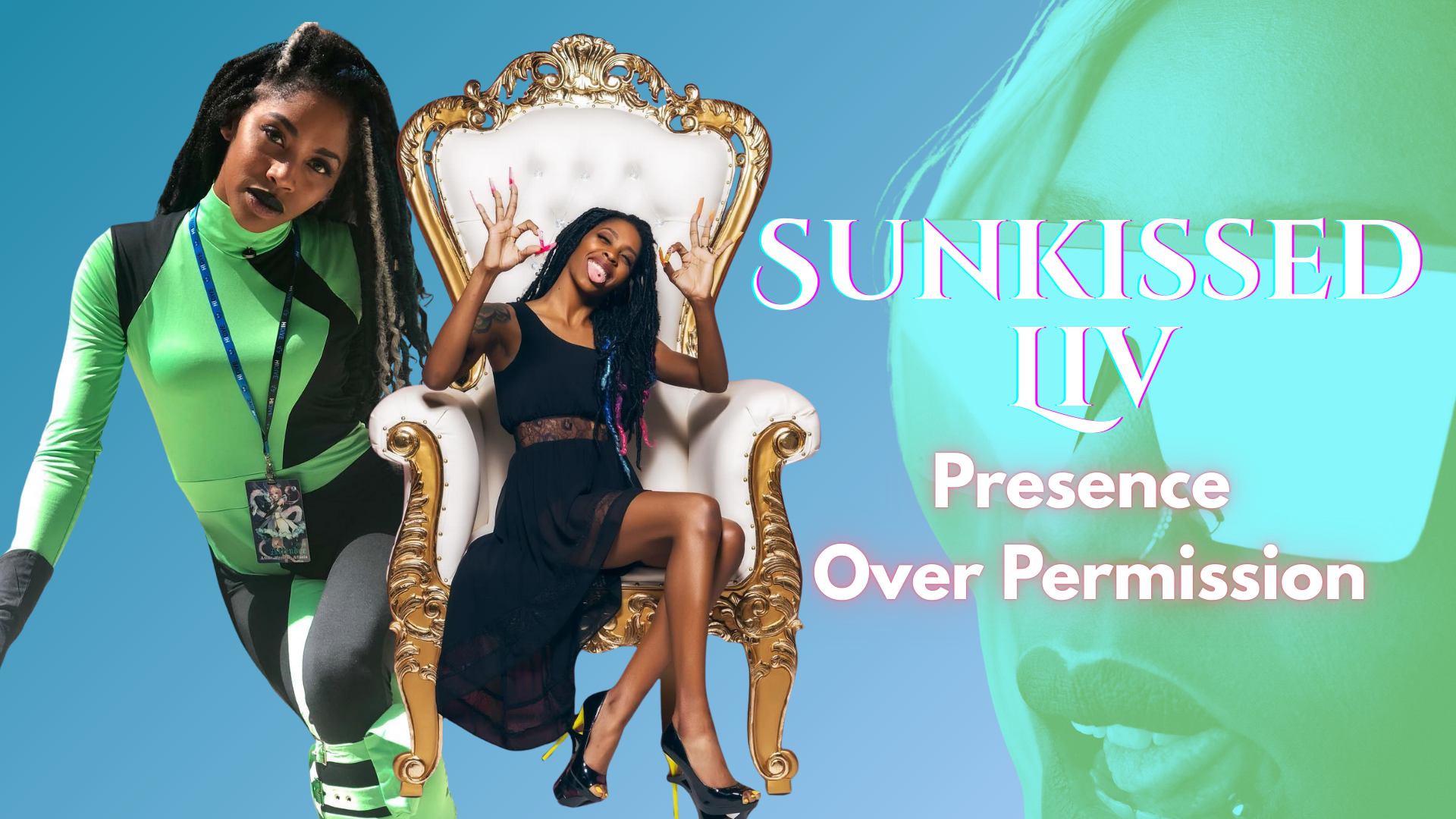
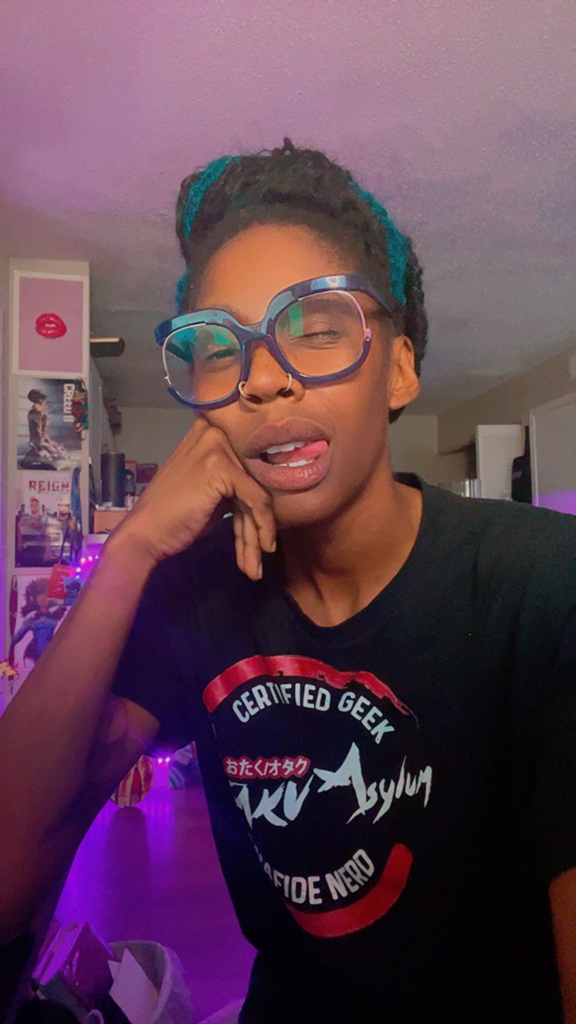
Before there was a controller in her hand, there was rhythm in her body. Long before Apex lobbies and “bonding over bullets,” Sunkissed Liv was training in dance spaces shaped by creators like Les Twins and Galen Hooks — learning discipline, performance, and the art of commanding a room without saying a word. Cosplay came next, giving her a still-frame stage to explore storytelling and character. But when the world shut down and conventions disappeared, Liv didn’t shrink.
She went live.
What started as curiosity — and a little bit of survival — evolved into something bigger. Today, Liv is known for her fearless FPS gameplay, her “aggressive positivity,” and her iconic tagline: “Your favorite Bruja… sometimes I identify as a threat.” But behind the jokes, the pressure plays, and the hype is something deeper: intention. Presence. Accountability. Community.
Liv doesn’t just entertain. She leads.
In this conversation, we talk about dance discipline, cosplay confidence, surviving the early streaming grind, and why being “too much” is exactly the point. And if you’re uncomfortable? Well. She’s fine with that.
Before streaming and cosplay, you had a strong background in dance, including workshops with artists like Les Twins and Ne-Yo. What did dance teach you about discipline, confidence, and showing up fully as yourself?
Well, to be fair, Ne-Yo ain’t teaching nothing LMAO. HOWEVER, I will add Galen Hooks into the mix with Les Twins. First, I definitely want to thank Les Twins and Galen Hooks for creating spaces to be able to let loose and be as creative as we can. Discipline wise, dance has taught me that all great things really do come with time. Whether it’s learning a new style, or perfecting the foundation of the one that you already know. For confidence, dance taught me that if you can’t convince yourself to believe in whatever performance that you do, how can you expect to convince your audience to believe in you? Exude confidence in everything that you do. Lastly, it taught me that showing up fully as yourself is the best thing that you can do for anyone.
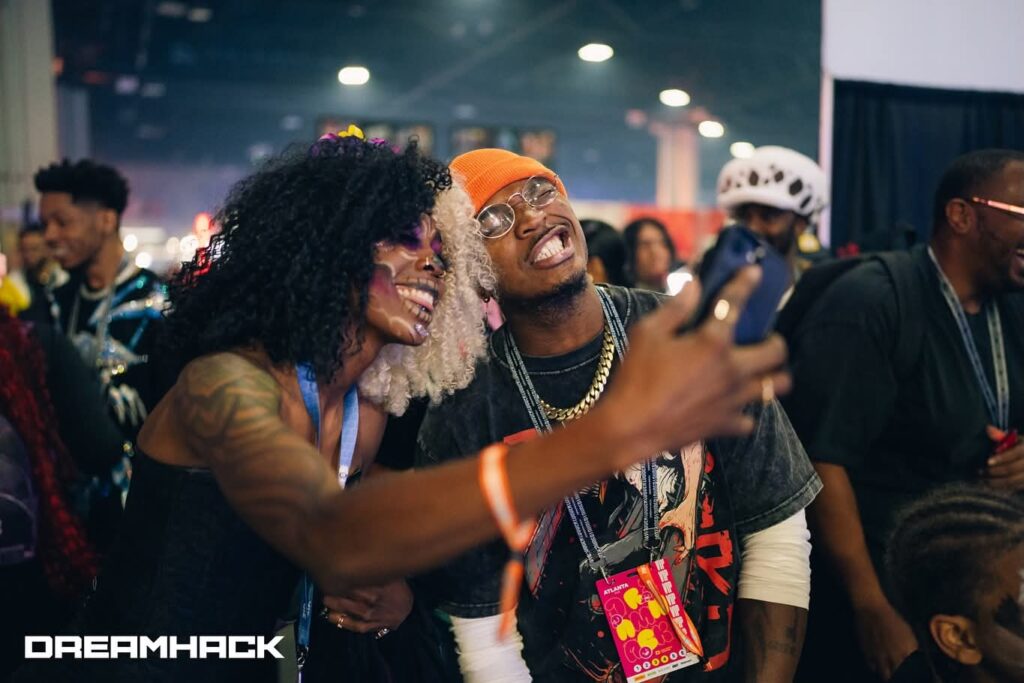
Do you see a connection between dance and the way you move through gaming and streaming — whether that’s rhythm, reaction time, performance, or presence?
I definitely see a connection, especially with presence. You have to be bold, unorthodox even, with your confidence in this streaming space, especially if you don’t want to get lost in the sea of other creators out there. Reaction time? Not so much…you see how often I get fried in these video games.
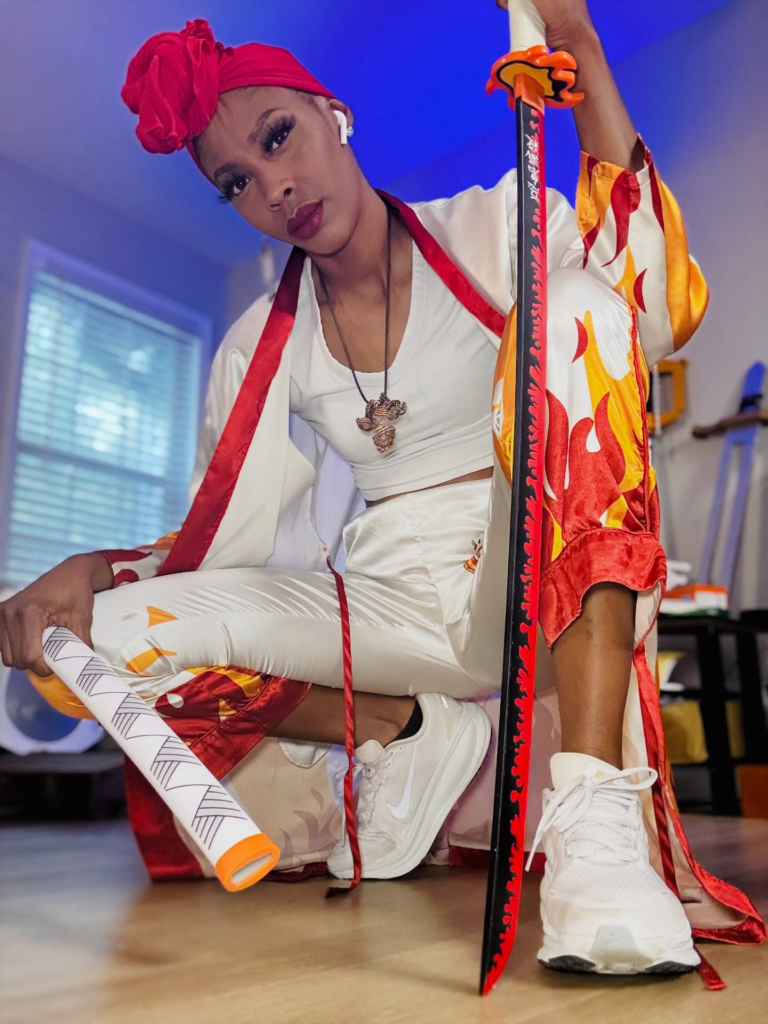
You started out in cosplay before transitioning into streaming during the pandemic. What did cosplay give you creatively that made the jump into live content feel natural — or necessary — at that moment?
I started out cosplaying because it gave me a way to explore storytelling and performance. From getting into character and learning how to command attention and communicate emotions without saying anything. Learning that taught me how to actually be confident on camera first, and how to engage and audience, as well as creating an image of myself that people can connect with. Streaming honestly just removed the still frame of a picture and allowed that same creativity to live in real time. Cosplay taught me how to be seen. Streaming taught me how to be present.
The pandemic pushed a lot of creators to hit “Go Live.” What was going through your mind when you first started streaming, and how did those early days shape the streamer you are now?
This is always a hilarious story for me to recall. When I first started streaming, my mindset was definitely a mix of curiosity, and survival. Everything that was familiar was gone in a blink–no more conventions, no more events–so I was more so wondering how I would be able to continue being creative while the world is paused. My friend Emmy suggested that I stream because I have the personality for it and that people would naturally gravitate toward me. I will say that the early days were definitely humbling, from talking to myself a lot to dealing with tech issues. Overtime, I learned that people aren’t there for the visuals, but they come for the energy and consistency. The early days forced me to listen, not be afraid to experiment, and grow in public, which is why I never take any interaction for granted. My platform is a shared experience for all that are here–not just a broadcast.
You’re best known for playing Apex Legends and other shooters — genres that can be especially unforgiving spaces. What drew you to FPS games, and what keeps you locked in?
The main thing that drew me into shooters was mainly the fact that there’s literally nowhere to hide and that all of your decisions matter in real time. What keeps me locked in honestly is the camaraderie of it all; I’ve made some friends with all of the shooters that I play, and I like to call the time that we have on these games “bonding over bullets”. As crazy as that may sound, we use those moments to just share our life experiences, talk about our day, and just escape the troubles of the world together, if only for a few hours.
Your tagline — “Your favorite Bruja, Liv… sometimes I identify as a threat” — is iconic. What does the Bruja identity mean to you, and how does it show up in both your confidence and your content?
Whenever you hear me say “Bruja”, I’m not necessarily talking about something mystical (even though I do dabble into spiritual practices). It’s mainly about power that comes from culture, intuition, and overall self-trust. It’s the idea of knowing exactly who I am without needing permission from anyone, and being comfortable that the confidence I exude will absolutely make others uncomfortable. It’s not about intimidation at all, but about control. Knowing when to joke, when to be calm, when to apply pressure, and when to lock in.
Now, my tagline “sometimes I identify as a threat” is both playful and intentional. It’s somewhat of a reminder that confidence doesn’t have to be loud to be powerful. Simply existing in spaces that people that look like me aren’t expected to dominate can feel disruptive to some people, and I lean heavily into that.
Your stream energy is often described as aggressive positivity. How would you define that in your own words, and why do you think that style of motivation resonates with your community?
To me, “aggressive positivity” is love through gritted teeth. I hype my community up through all things, but I also hold them accountable in a way that is loud, funny, and rooted deep in care. I’m always asking people if they have eaten today, and if they tell me no, I may cuss them out a little, but it’s NEVER out of disrespect. It’s me saying “I see you. You matter to me.”
For me, that energy works because it’s personal. I don’t treat people as a username or just a viewer count–I talk to these people, I check in, I remember them. I remember when their kids move up a level in karate, and when they go shopping for prom dresses. My community knows that I’m serious about their well-being, so they leave feeling seen, supported, and maybe like their adopted Southern Auntie lit a fire under their ass a little–but they always feel better than when they showed up.
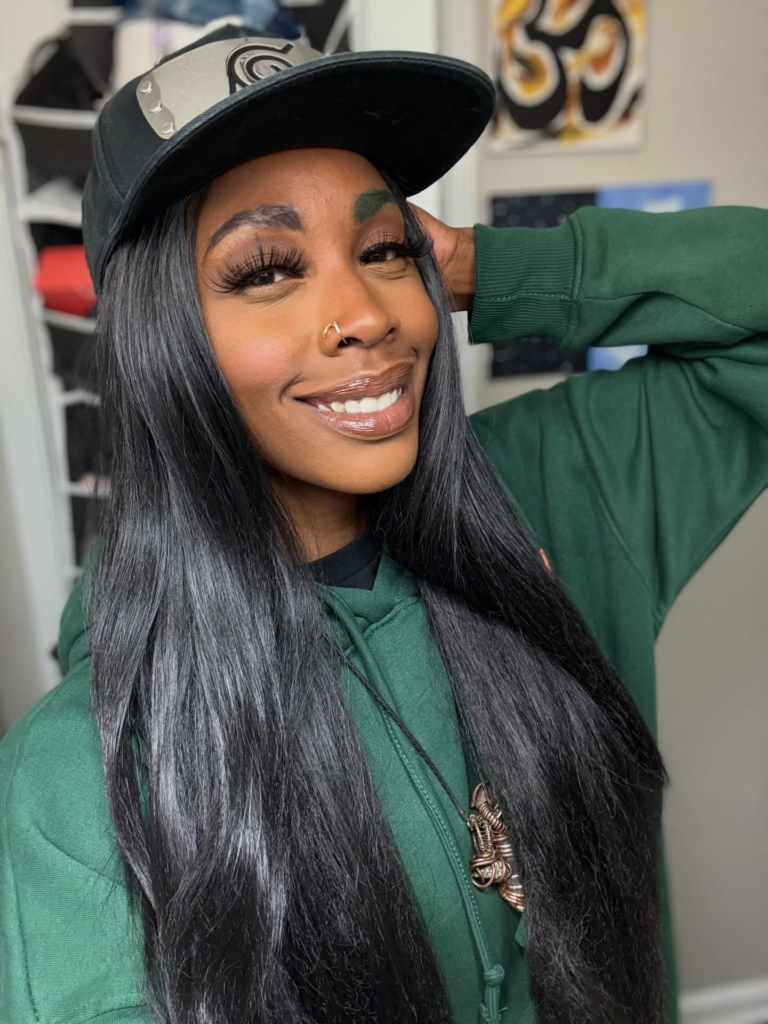
You don’t just hype people up — you challenge them. Why is pushing your community important to the way you lead your space, rather than just offering comfort?
Comfort isn’t the only thing that helps someone grow. I care about my people too much to soothe them and I damn sure won’t allow them to hide behind self-doubt or bad habits. I offer support, humor and a place to vibe out, but I also push people to eat when they forget, remind them that rest is important amidst this “hustle culture”, and to speak kinder to themselves whenever their brain is fighting against them.
Gaming and creative spaces don’t always make room for women to be loud, confident, or dominant. How do you navigate that resistance while staying grounded in who you are?
I meet any type of resistance with consistency. I show up in these spaces the same version of myself, both online and offline. That lets people know that I’m not some temporary creator, and that I’m not asking for permission. I’m here because I belong, and the space that I take up was earned.
Do you feel like your community mirrors your energy back to you? What’s something about your chat or community culture that makes you genuinely proud?
They absolutely mirror my energy back to me tenfold. I tell my community often about my hardships and they are quick to make sure that I’m taking time to myself and pouring the same amount of love and care into me the way that I pour into them.
One thing is that I genuinely love the fact that we all hold each other accountable with building better habits, and celebrating each other’s successes. I also appreciate how welcoming my community is to anyone that is new, regardless of what path of life they walk.
Looking back across dance, cosplay, and streaming, what’s a moment where you realized this path was about more than just performance — that it was about impact?
There is a broadcast that my good sis @ChellOAG (please follow her everywhere y’all!) and I have called Curly News Network or CNN for short. It’s centered on giving people of all genders that have 4A-4C hair textures hair care tips. Someone approached me with gratitude on the episode that we did because he learned so much about his hair, and he was able to find products that fit his texture, and now he’s noticed a positive change in his hair growth thanks to us. That moment clicked that what you do on these computer or phone screens can impact others.
For creators who are dancers, cosplayers, gamers, or anyone who feels like they might be “too much,” what would you want them to know before they start shrinking themselves?
Baby, don’t. Please. The right audience, the right collaborators, and the right opportunities will come to you. Being “too much” just means that you’re fully expressed in spaces that aren’t used to seeing you take up room. You don’t need to chop yourself up for anyone to be easier to digest.
Let them choke.
Discover more from Otaku Asylum Magazine
Subscribe to get the latest posts sent to your email.